Valorant Champions Shanghai group stage delivers the meta shift every ranked player should study
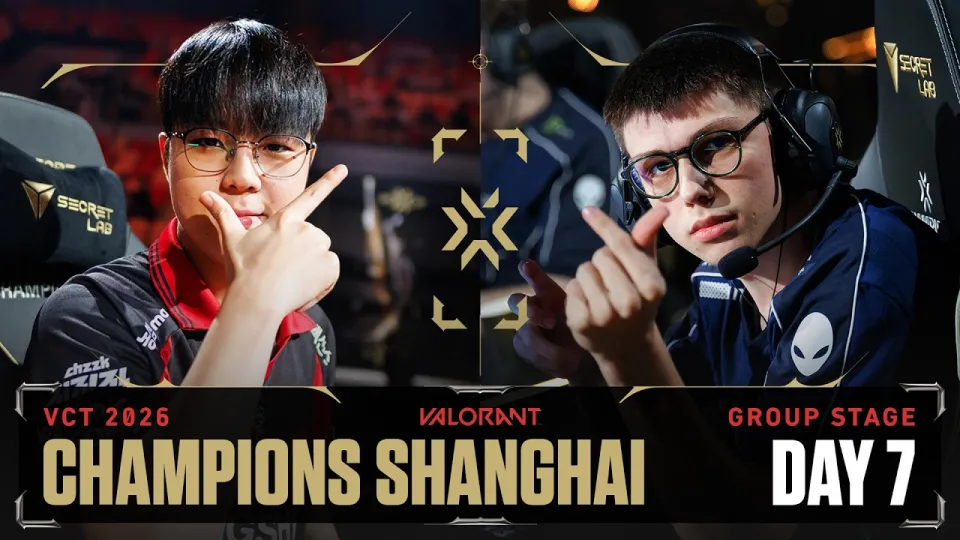
Video: VALORANT Champions Shanghai — Group Stage — Day 7
Need articles like this for your video? They help promote it on YouTube and Google — order them in the Telegram bot @sat_sit_bot. It writes articles around your video, embeds the video and publishes them on popular niche websites (no ads). Try it free: 50 articles on us.
· based on the channel VALORANT Champions Tour
Key takeaways
- 16 teams from Americas, CN, EMEA and Pacific compete at VALORANT Champions Shanghai, running September 24 to October 18.
- Two different teams won Masters events in 2026, so Shanghai is the first tournament where both title contenders meet.
- Day 7 of the group stage drew heavy viewer discussion about repeated technical pauses and CN region depth.
- Group stage matches are best-of-three; the top seeds advance to playoffs and the rest go home before the main bracket.
- Official VCT updates, brackets and schedule drop first on the VALORANT Esports X account.
Valorant Champions Shanghai is the 2026 world championship where 16 teams from Americas, CN, EMEA and Pacific fight for the year's biggest trophy, and the group stage decides which of them survive into the playoff bracket. Day 7 of that stage, published by the VALORANT Champions Tour channel, is the clearest snapshot yet of how the 2026 meta actually plays out under tournament pressure. For schedule changes, bracket updates and stream links, the fastest source is the official VALORANT Esports X account.
What the Valorant Champions Shanghai format actually means for viewers
The tournament runs from September 24 to October 18, with sixteen qualified teams split across four regions and a group stage that feeds directly into playoffs. Understanding the structure makes Day 7 far easier to follow: every map matters because round differential and head-to-head results can decide who advances when records tie.
- Sixteen teams qualify through Americas, CN, EMEA and Pacific regional circuits.
- The group stage is played as best-of-three series, so a single loss does not eliminate a team.
- Teams that top their groups get seeded into the upper bracket of playoffs; lower finishers drop into elimination territory.
- The playoff stage shifts to best-of-five for the grand final, where map pool depth becomes the deciding factor.
The practical consequence is that group stage Valorant is not a highlight reel of clutch plays — it is a drafting and adaptation test. Teams that burn their comfort picks early often find themselves with nothing left in the map veto during elimination matches.
Why the 2026 season set up Shanghai as a genuine power shift
Two separate Masters events in 2026 produced two different champions, which is the single most important context for reading the Shanghai group stage. In previous seasons, one roster usually established dominance early and carried that aura into Champions. This year the title has changed hands, and the description of the event frames it plainly: familiar names, new contenders, and a fearless generation of challengers.
That matters tactically. When no team owns the meta, group stage results become noisy — a favourite can drop a map to an underdog running an unusual composition and still win the series. Analysts watching Day 7 had to separate genuine weaknesses from one-off map losses, and that distinction is exactly what makes the group stage worth watching in full rather than through a highlight package.
Reading Day 7 like a coach instead of a fan
Day 7 is a full broadcast day of group stage Valorant, and the useful way to watch it is by tracking repeatable patterns rather than individual frags. Three things stand out as the most transferable lessons for ranked and amateur players.
- Utility discipline on retakes. Watch how professional teams stagger smokes and flashes instead of dumping everything at once. The second wave of utility is what actually wins the post-plant.
- Eco round conversion. The most discussed weakness in the viewer comments was losing supposedly unlosable rounds against eco buys. Pro teams that win those rounds do it by forcing early contact and denying the save, not by playing passively.
- Mid-round calling when set plays break. Several viewers noted that some teams look lost once their prepared strategies fail. The fix at the top level is a designated secondary caller and pre-agreed default setups for every site.
If you want to improve at Valorant, pick one of these three and track it for an entire map. Watching a full broadcast day with a single focus beats passively consuming ten highlight clips.
The tech pause problem and what it says about broadcast production
The most repeated complaint in the comments under Day 7 was the sheer number of technical pauses, with viewers joking about an endless series of them. Technical stoppages are a real part of live esports, but their frequency in a group stage broadcast raises legitimate questions about server stability, player hardware checks and the handover between consecutive series.
For viewers, the practical advice is simple: use the pause windows. Broadcasts typically hold on a static camera, so it is the best moment to check the live bracket, review the map veto or read up on a team you have not followed during the regional season. For tournament organisers, repeated pauses in a group stage are a scheduling risk — a delayed series pushes every match after it, and late-day games are where sloppy Valorant tends to appear.
Are CN teams really the weak link at Valorant Champions
The harshest thread in the comments argued that several stronger teams from other regions missed Champions entirely, and that CN representatives were losing rounds they should never lose. That criticism deserves a fair reading rather than a dismissal.
Region depth is a structural issue, not just a skill issue. CN qualified a fixed number of slots, and the regional circuit produces a smaller sample of international matches than EMEA or Americas, so CN teams arrive with less exposure to unfamiliar compositions. When their prepared strategies work, they look sharp; when an opponent breaks the setup, the fallback is thinner. That is a coaching and preparation gap as much as a mechanical one, and it is exactly the gap that a group stage exposes over three maps rather than one.
At the same time, writing off an entire region after a handful of group stage series ignores how quickly CN rosters have closed distance in previous cycles. The honest conclusion from Day 7 is narrower: CN teams need better mid-round adaptation, not a rebuild from scratch.
Where to follow the rest of the Valorant Champions Shanghai bracket
The group stage is only the filter; the playoff bracket is where the year's champion is actually decided, and results move fast enough that static previews go stale within hours. The official channels are the reliable source for the live schedule, veto results and stream links: the VALORANT Esports X account for instant updates, plus the official Twitch channel and the VALORANT Esports YouTube channel for full VODs. Match photos and event coverage land on the official Flickr page, and written announcements appear on valorantesports.com.
Final takeaway
Day 7 of the Valorant Champions Shanghai group stage is worth watching in full because it shows a 2026 season without a dominant team, where two Masters titles sit with different rosters and every group stage map reshapes the bracket. The recurring themes — utility discipline, eco round conversion, mid-round adaptation and broadcast stability — are the same issues that decide ranked games and amateur tournaments. The VALORANT Champions Tour channel produced this broadcast day as part of its official event coverage, and its full-length format is the best way to study how professional Valorant is actually played. Follow the official VALORANT Esports X account to catch the next stage before the bracket locks.
Questions & answers
How many teams play at Valorant Champions Shanghai?
Sixteen teams qualify for the event, drawn from the Americas, CN, EMEA and Pacific regions. They are split into groups for the group stage, which runs from September 24 to October 18 alongside the playoffs. The top finishers advance deeper into the bracket while the rest are eliminated.
Why were there so many technical pauses during the group stage broadcast?
Viewers flagged a high number of tech pauses across the Day 7 broadcast, with several joking that the stoppages never ended. Technical stoppages usually come from server issues, hardware checks or handovers between consecutive series. They matter competitively because delays push later matches into a tired part of the schedule.
Are CN teams weaker than other regions at this event?
The group stage showed CN representatives losing rounds that looked secure, particularly against eco buys and in 5v2 situations. Part of that is structural: fewer international matches means less exposure to unusual compositions. The fair conclusion is a mid-round adaptation and coaching gap rather than a total skill gap.
Where can I watch the full Valorant Champions Shanghai matches?
Full-length VODs and live broadcasts are available on the official VALORANT Esports YouTube and Twitch channels. Instant schedule, bracket and result updates are posted on the VALORANT Esports X account. Written news and event information appear on valorantesports.com.
Source: VALORANT Champions Shanghai — Group Stage — Day 7 · Markdown version