How does a secret mountain base in Rust survive a whole wipe without being raided?
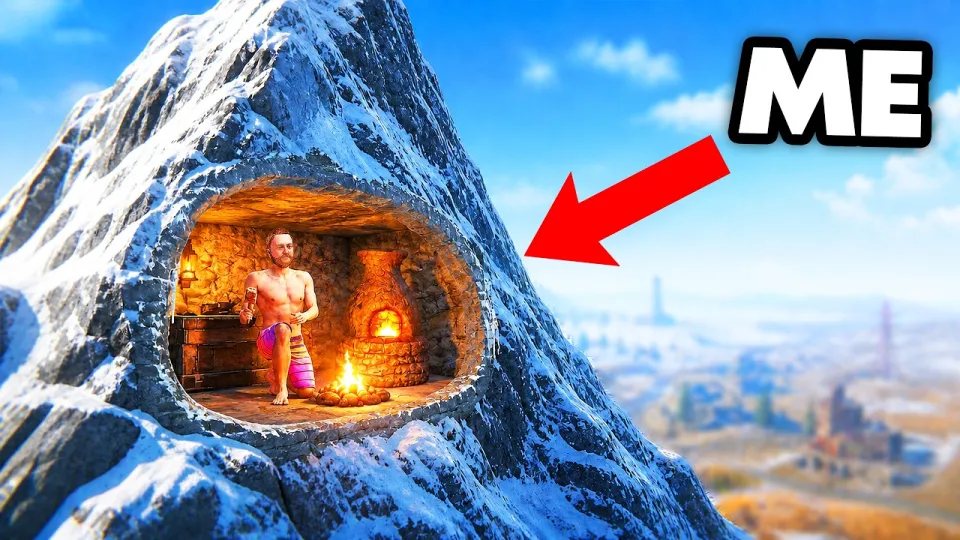
Video: I Lived in a Secret Mountain Base in Rust
Need articles like this for your video? They help promote it on YouTube and Google — order them in the Telegram bot @sat_sit_bot. It writes articles around your video, embeds the video and publishes them on popular niche websites (no ads). Try it free: 50 articles on us.
· based on the channel Memeio
Key takeaways
- Memeio's premise: one full Rust wipe in a tiny base tucked into mountain terrain, with no one finding it.
- Small footprint beats size: a 1x2 or 2x2 in a spot nobody pathfinds through is harder to raid than a compound.
- Camouflage is the real defense — matching the biome's colors and staying off common monument routes.
- Eco raiding with spears is cheap: broken wooden spears can be recycled into stone spears to stretch resources.
- Cheaters and offline raids remain the two threats that a hidden location cannot solve.
A secret mountain base in Rust works because it removes the base from the list of things other players are looking for: a small footprint, a location off the loot routes, and camouflage that blends into the rock mean most raiders never even know the base exists. Survival then depends less on turrets and more on discipline — no visible smoke, no loud farming, no obvious door facing the valley. Memeio's run on this idea, documented in the video and shared through Memeio's X account, is a useful case study in why hiding beats fortifying in solo Rust.
Why a hidden mountain base in Rust beats a big compound
Rust rewards players who are boring to find. A large base announces itself from a kilometre away: tall walls, wind turbines, a shooting floor, and a roof that catches the eye from any hill. A mountain build inverts that logic — the terrain does the concealment work for free, and the structure itself is small enough to be missed by someone running past twenty metres below.
The economics are simple. A 2x2 with a triangle airlock costs a fraction of a compound, so losing it hurts far less, and rebuilding takes an afternoon rather than a wipe. Raiders also weigh effort against reward: a base that looks empty and inaccessible rarely justifies the sulfur. That is the entire thesis behind the trap base and secret base genre, and it is why viewers keep returning to creators like Memeio who build around it instead of against it.
How to pick a mountain spot nobody checks
Site selection is the whole game, and it comes down to three filters: visibility, traffic, and approach.
- Stay off monument routes. If players run the same line between a launch site, a mining outpost, and their own base every day, that line is the worst possible address. Pick terrain that sits behind a ridge from the nearest road.
- Use dead ground. A pocket that is invisible from the valley floor but open to the sky is ideal — you can still see helicopters and drop crates while staying unseen from below.
- Check the silhouette. Stand where a passing player would stand and look up. If your roof, door frame, or furnace glow breaks the rock line, move.
- Avoid the obvious shelf. Flat plateaus near the summit are the first place anyone scans, because they are the easiest place to build.
- Test the approach time. If you need more than a couple of minutes to haul loot from the nearest road, the location is probably too remote to be practical for a solo wipe.
Camouflage, doors and the discipline of staying quiet
Camouflage is not a skin choice, it is a behaviour pattern. A base painted to match the rock still gets found if a furnace is roaring at night, if a repair bench sits outside, or if the door faces the one angle with clear line of sight. Keep the exterior bare, keep lights off, and store anything that glows inside.
Material choice matters more than most players admit. Stone reads as terrain from a distance, while sheet metal and especially high external walls read as a player base. A small stone shell with a single reinforced core is both cheaper and quieter than a layered honeycomb that screams value. The same principle applies to the door: one airlock, no decorative signage, no drop boxes visible from the slope.
Discipline extends to sound. Gunfire attracts attention across an entire grid, so a mountain dweller who farms quietly, avoids unnecessary PvP near home, and moves loot at odd hours keeps the location off the map for far longer than any wall would.
Eco raiding tricks that make a small base viable
A hidden base still needs to generate progress, and that is where cheap raiding comes in. The spear economy is the classic example: wooden spears are dirt cheap, and once they break they can be recycled into stone spears, effectively doubling the value of the wood and stone you already spent. Ordering the inventory so broken spears sit ahead of intact ones lets you craft without shuffling items mid-fight.
Other low-cost habits that pair well with a mountain lifestyle:
- Farm nodes on the far side of the ridge, never downhill from your own door.
- Use bows and crossbows for early pressure; they cost almost nothing and do not broadcast a grid-wide gunshot.
- Raid soft targets — wooden doors, decayed bases, abandoned starter shacks — rather than contesting a defended compound.
- Bank sulfur instead of spending it; a small base has limited storage, so every raid should have a clear payoff.
This is the same logic that makes trap bases work: the goal is not to win a fair fight, it is to make every interaction unfair in your favour.
The threats a secret base cannot solve
Hiding solves discovery, not everything else. Cheaters remain the great equaliser — an aimbot or ESP does not care how well your roof blends into the rock, and any wipe can end because of one player with software. Offline raiding is the second problem: a base nobody has seen during the day can still be found at 4 a.m. by someone sweeping the map with explosives and time.
There is also the honest self-assessment problem. A build that feels invisible to its owner is often obvious to everyone else, especially on high-population servers where players scan the same hills every wipe. The reliable test is to ask someone else to look at the location cold, or to review footage of your own base from a distance rather than from inside it.
What the audience actually argues about
Viewer discussion around secret-base videos tends to split into three camps, and each raises a fair point.
The sceptics argue that a base on a mountain is only hidden from players who are not looking, and that anything visible from the air or from a neighbouring peak is already compromised. They are right that concealment is relative, not absolute.
The loot-sceptics note that convenient early-game hauls — a crate, a body, a lucky box — show up suspiciously often in edited videos. That is a fair observation about content pacing rather than a claim about any specific run, and it is worth remembering that a highlight reel is not a survival guide.
The converts come from other survival games. Players with thousands of hours in Ark or similar titles consistently say the same thing: the best raid defence is never being raided, and a perfectly hidden pocket — under a waterfall, behind a ridge, inside a rock formation — outperforms any wall. The mountain base is that idea applied to Rust.
Useful links
- Memeio on X — channel updates, clips and announcements.
- Epidemic Sound — the music library credited for the video's soundtrack.
The takeaway for your next wipe
A secret mountain base in Rust is less a building technique than a playstyle: small, quiet, camouflaged, and placed where nobody has a reason to walk. The build itself is cheap enough to lose, which is precisely why it works — you stop defending an asset and start protecting a position. Memeio's mountain run is a clean demonstration of the trade-off, and the channel's wider catalogue of trap bases and hidden builds is the best place to see the idea pushed further. If you want to follow what comes next, Memeio's X account is where the updates land.
Questions & answers
Is a secret mountain base in Rust actually safe from raids?
No location is fully safe, but a small camouflaged base off the main loot routes is raided far less often than a compound. The realistic goal is to be skipped during the search, not to be unraidable. Offline raids and cheaters remain genuine risks regardless of placement.
How big should a hidden base be to stay unnoticed?
Most successful hidden builds are 1x2 or 2x2 with a single airlock, because the footprint is small enough to blend into terrain. Bigger structures need more materials, glow more at night and read as a base from a distance, which defeats the purpose.
What is the spear recycling trick for cheap eco raids?
Broken wooden spears can be crafted into stone spears, so the same resources effectively give you two rounds of weapons. Keep the broken spears positioned ahead of intact ones in your inventory so crafting works without constant reordering.
Why do viewers doubt the lucky early loot in these videos?
Because edited survival videos compress hours of farming into minutes, convenient crates and bodies look more frequent than they are in a normal wipe. Treat the footage as entertainment and a source of tactics, not as a realistic timeline of a solo run.
Source: I Lived in a Secret Mountain Base in Rust · Markdown version